
Sacred place
Asakusa Shrine
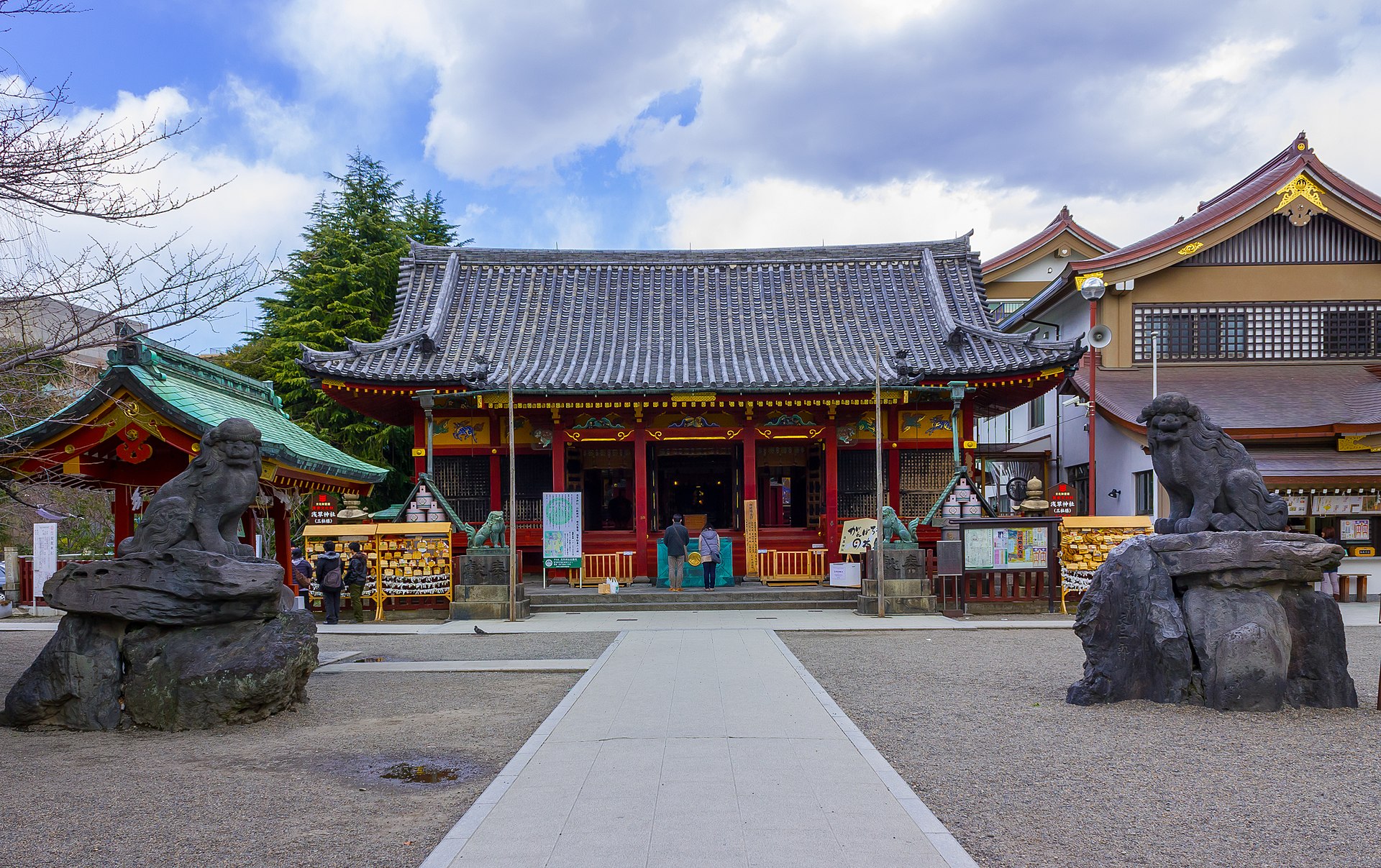
Asakusa Shrine, located beside Asakusa Temple in Tokyo's Taito ward, enshrines three figures from the temple's founding history as the 'Three Shrines' (Sanja). Known nationally for its May festival, the shrine preserves Edo-period architecture and stands as a rare survivor of pre-war Tokyo.
Description
Asakusa Shrine stands on the east side of Asakusa Temple in Taito ward, Tokyo. It enshrines three figures—Haji-no-Manakachi-no-Mikoto, Hinokuma-no-Hamanari-no-Mikoto, and Hinokuma-no-Takenari-no-Mikoto—who appear in Asakusa Temple's founding history and are venerated as the 'Three Shrines' (Sanja). The shrine is also known as Sanja Gongen. Together with the temple and its market street (Nakamise), the shrine forms a unified gateway precinct that has preserved the architectural character of Edo-period urban culture, including the Thunder Gate, Treasure House Gate, and five-storey pagoda.
According to Asakusa Temple's founding narrative, in 628 brothers Hinokuma-no-Hamanari and Hinokuma-no-Takenari, fishing in the Sumida River, netted an image of the Avalokiteśvara. The local official Haji-no-Manakachi identified it as a sacred sculpture and converted his home into a temple. The descendants of all three men established a shrine to honour their ancestors as the 'Three Shrine Powers' (Sanja Gongen), which became the present shrine.
The shrine's main hall, subsidiary hall, and worship hall date to 1649 and were donated by Tokugawa Iemitsu. Built in the gongen architectural style, these structures are designated a National Important Cultural Property and represent a rare Edo-period shrine precinct to survive both the 1923 Great Kantō Earthquake and the 1945 air raids. The principal enshrined kami are the three founders; secondary shrines honour Tokugawa Ieyasu (Tōshō Daigongen) and Ōkuninushi-no-Mikoto. After the Meiji-era Shinto-Buddhist separation (1873), the shrine became independent and was designated a provincial shrine.
The Sanja Matsuri, held in late May, is one of Tokyo's three great festivals and draws around one hundred portable shrines from neighbourhood associations, plus three from the main shrine, which process the surrounding area. The shrine also observes a ritual called Jigenkai (a rite held within the main hall on 18 March) and welcomes half-yearly pilgrims on 1 July.
Enshrined deities
Sources
浅草神社 由緒・所在地資料
Institutional source各社寺・公的機関
浅草神社の名称・所在地・由緒を確認するための社寺・公的機関の公開資料。
浅草神社 公式・公的由緒資料
Institutional source浅草神社の由緒、所在地、参詣圏を確認するための公式・公的資料。
浅草神社 - Wikipedia 日本語版
Secondary sourceWikipedia contributors
浅草神社の名称・所在地・座標を確認するため、Wikidata item Q670049 と日本語版 Wikipedia を参照。
https://ja.wikipedia.org/wiki/%E6%B5%85%E8%8D%89%E7%A5%9E%E7%A4%BE浅草神社 地域資料・百科資料
Secondary source浅草神社の名称、所在地、歴史的背景を補助的に確認する二次資料。
Sources
Read next
Your ties
Trace your own ties
Begin from what you have just read, and open the connections that are yours.
Trace your ties